People see the tip of the iceberg when it comes to the scrap metal story. The pile in the garage, the old bits in the yard, or the broken appliance on the verge. They seldom see what happens to the next thing that comes from their scrap trailer, or what happens to the one trailer of scrap between load and new use. Well, this is the story. Learn about one person's trailers, one morning, and one very ordinary Brisbane household from start to finish. The household is fictional, but the steps are common to most scrap runs. This is the Brisbane Metal Recycling walkthrough if you've ever wondered how a visit to Brisbane Metal Recycling actually works.
“The Pile That Finally Got Its Turn” — 6:30 AM
Our story begins in a carport in a Brisbane suburb, where a man we will call Mark stands holding a mug of tea, gazing at a stack he's neglected for around 2 years. It has an old bike frame, a collection of steel shelves, an old barbecue and a broken aluminium ladder. There's also a box of old pipe offcuts from a bathroom job, a dead lawn mower and a washing machine that died when the last wet summer came. Mark isn't an expert, and he tells you so. What he does know is that the pile has become something that he feels guilty about every time that he parks the car. He owns a borrowed box trailer, has a free morning, and a promise he made to himself that today is the day. He decides what to load first before anything else. He walks up the stack and sorts and parcels out what he wants to keep and what he's ready to give away. A mower he may still fix stays. He puts away his late father's old toolbox. The remainder is on the list. It's a small step, but it does count. When you're halfway through a scrap run and start wondering about the things you're not buying, it doesn't really go smoothly.
The Magnet Test — 7:00 AM
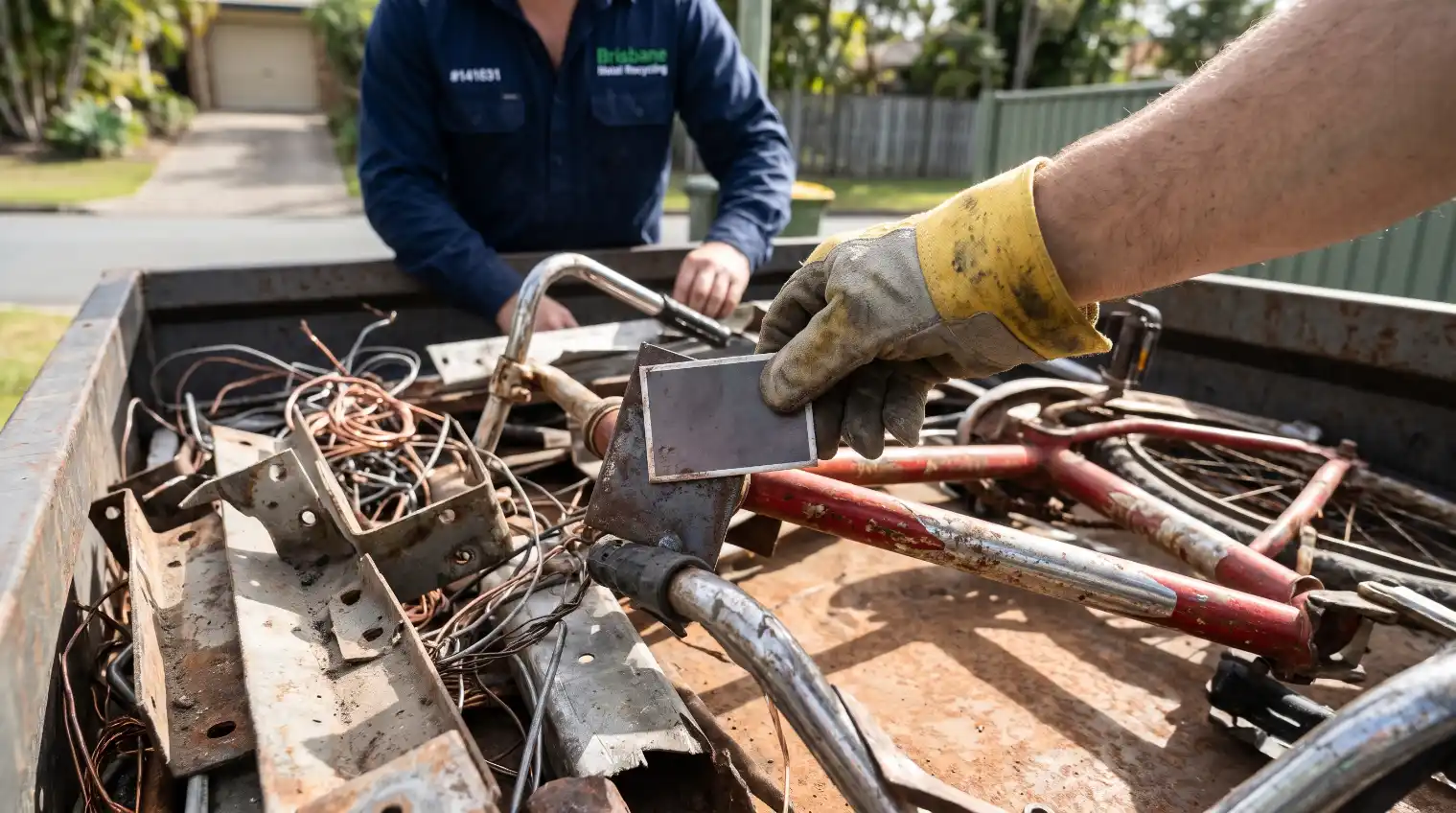
Mark has heard about the magnet trick, and so he picks up a magnet from the fridge. He puts it on a shelf, and it sticks! Steel. He tests it on the bike frame, and it sticks again. The ladder shows no reaction, so it's likely aluminium, and its lightness confirms that. The pipe offcuts don't attract the magnet either. They are a reddish-orange color, which means he can tell they are probably copper. The barbecue is a mixed bag. The body is steel, while the knobs and fittings are a different material. Mark doesn't have to solve it. He sorts what he can into pretty crude categories and lets other folks who do this regularly do the hard work. This is a key point to be learned from the morning. You don't have to be certain about everything you bring. Sorting at home doesn't have to be perfect; it's to make it easier and give you an idea of what you actually have. Three lumpy stacks are better than one big tangled stack.
Removing What Isn’t Metal — 7:30 AM
Next, Mark takes 15 minutes to remove anything that isn't obviously metal. He takes the plastic handles from the barbecue, removes a rubber mat from the shelf unit, and unscrews a timber panel from the back of the shelving. He isn't too adventurous, so he doesn't take things apart in unsafe ways. He only takes the easy extras—he has been told that non-metal attachments can diminish the value of a piece. The washing machine is a different story. It's a mix of metal, wiring, and other materials, and it takes most of the day to break apart. So he leaves it intact. For products like this, it's typically best to bring the product in and let the yard take care of the rest. He also takes care to steer clear of any form of risky behavior. He doesn't pry open anything that could be pressurized, and he doesn't cut into anything he doesn't understand. If he isn't sure, he'll ask.
Loading the Trailer — 8:00 AM
The biggest mistake first-timers make is loading. The first thing that comes to Mark's mind is to throw everything in as soon as it arrives. The second thing, which is a good thing, is loading the heavier items low and centered, the lighter ones on top, and everything locked in. The loose ladder on an open trailer is a danger to every driver behind him, and so he puts the load down and double-checks the ties. Little bits are kept in a couple of crates to stop them getting spread out. Copper waste in one and aluminium in another. The steel is inserted loose at the bottom, and the heavier pieces are inserted where they will not move. It does the job, but it isn't fancy. The aim is to get a trailer that is safe to drive and simple to unload. He wears gloves when handling all things. Sharp edges on scrap and old metal can cut or injure bare hands.
The Drive and the Short Phone Call — 8:45 AM
Mark makes one more smart decision before he leaves. He calls Brisbane Metal Recycling to check whether they take washing machines, then asks if there's anything he needs to know before he comes to pick it up. It saves him a potentially wasted trip and takes only two minutes. That phone-call practice should be emulated. When carrying anything unusual, like pressurized goods, vehicle components, batteries, or goods that have contained chemicals, it is best to check beforehand. Rules and requirements may differ for the item; don't assume.
Arriving at the Yard — 9:15 AM
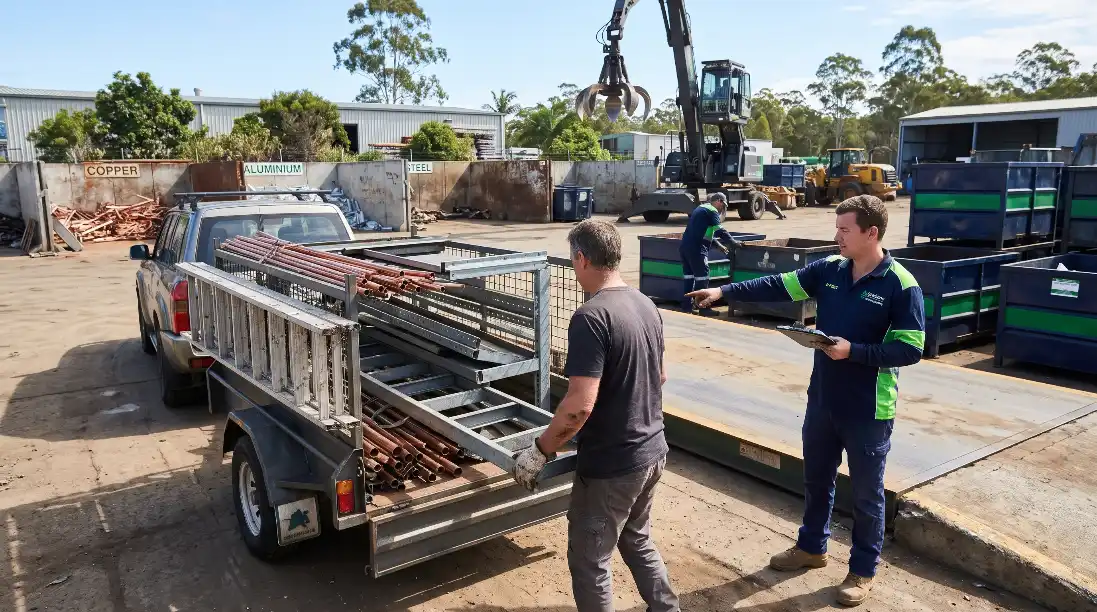
Mark pulls in expecting chaos. Instead, he finds organized activity. Cars are lined up, staff guides traffic, and a clear path is set for vehicles. He is loaded onto a large scale called a weighbridge that weighs the truck and its load. It is also weighed after his unloading; the difference between the two readings is made known to everyone, giving them an idea of the amount of material delivered. This is the one thing that many find comforting. The weighing is performed in front of you, and not by estimation. When you're unsure about whether you'll be treated fairly, watching the numbers pop up is a great way to start.
Unloading and Checking — 9:30 AM
Staff point Mark to an unloading point. He retrieves objects that he can manage, and staff assist him with the larger items. Once the material is removed from the trailer, staff inspect and classify it. The steel shelves follow suit. An aluminium ladder comes with the aluminium. The copper offcuts are added separately as they are made of a different metal. The BBQ is inspected, and the combined materials are addressed as needed. The washing machine is oriented toward the proper space for the appliances. In this case, sorting at home helps! The metals were delivered in different sets, so there is little mix-up about what is what. If everything had been mixed, it would have been harder to identify the copper, and the process would have taken longer. When something isn't clear, staff ask questions. A well-manicured yard isn't too fast and doesn't leave you in suspense. It helps you understand what it is and why.
Where the Price Comes From — 10:00 AM
While Mark waits, he asks the question everybody asks: What is the basis for setting the price? There's no single right or wrong answer; it depends on several factors. The most important factor is the type of metal, as the value of copper, aluminium, brass, and steel differs. The amount sold is determined by weight, so quantity matters. Condition also matters, as clean, separated metal usually fetches a higher price than a mixed, dirty pile. The wider market also matters because scrap prices fluctuate over time, so what was paid last year may not be what's paid today. Another thing is that nobody can tell you the exact number until you see what you have. The process should be transparent, and you should know what to expect. It's important to know what each type of metal costs and to ask questions about anything that doesn't resonate with you.
Getting Paid — 10:15 AM
Mark completes the deal, gets paid, and picks up his empty trailer. The amount isn't life-changing, nor does he claim it is. But it's real money for material that had been occupying space for two years, and the carport looks twice as big now. What surprises him is this feeling. The pile which had been pestering him for years has disappeared in a short time—less than a morning.
What Happens to the Metal Next? — 10:30 AM and Beyond
Mark drives home. The metal stays are still in place, and its tale continues. After sorting and weighing, the material is classified as metal or other. Steel is rolled with other steel, and aluminium is rolled with aluminium. Copper is separated because of its value. The yard can prepare the sorted metal and then deliver it to a metal scrap recycling facility, which will melt it down and return it as raw material for new products. That's why metal is an ideal material for recycling. Many metals can be melted and remelted again and again without changing their basic properties. The steel and aluminium of Mark's discarded shelves and ladder can be melted down and made into something new. It's the same material, but a new life! Another reason the scrap industry matters is that recycling metal typically requires less energy than producing metal from raw ore. That's not something that requires a science degree to appreciate. A pile of metal that isn't in the bin and is returned to the manufacturing process is a good outcome for everybody.
What Mark Would Say
Later in the week, one of Mark's neighbors asked him how the run was. His counsel was plain and simple, and it's worth repeating. There's no "right" time. The pile won't shrink by itself, and it is more manageable than you may think. If possible, roughly sort it with a magnet. Take off easy non-metal extras (without risk-taking). Load securely, use gloves and strapping. Make a special call if something unusual is occurring. Also, it is okay to ask questions at each stage! Most importantly, don't feel embarrassed if you have just a small load. All you see in a scrap yard every day is a single trailer, a couple of crates, and an honest morning's work.
Your Own Trailer Load Is Waiting
Mark's carport is a standard version of everyone's carport. It may be a shed, a side path, or the corner of the backyard. It can be a daunting pile, but it's usually sorted and organized by morning. If you're ready to start, contact Brisbane Metal Recycling. Please tell us what you have and what you need to know BEFORE you arrive, and we'll help you clear a forgotten pile and get some cash! Your load may not be as heavy as you imagine, and the morning may be easier than you'd think.