Scrap metal is one job that looks easy until you do it. With a piece of old roofing sheet, a bundle of pipes, or a ball of wire in your hands, you risk getting cut by an edge, straining your back with the weight, or burning yourself on a hot surface. It's not unmanageable; it's just easier to handle when you know what to expect. Whether it's a first-time shed-cleaner or a tradie who comes to us with offcuts every week, Brisbane Metal Recycling has people from all walks of life visiting our premises. Risks don't go away with practice; they just become different. That's why we have written this guide in three levels. Start with the one that suits you, borrow from the others, and make every trip to the yard safer, quicker and less painful the next morning.
Level One: The Beginner, Clearing Out for the First Time
When you're working with scrap for the first time, your biggest enemy isn't a dramatic accident. It's the small, ordinary injury that happens because you don't realise how sharp, heavy or awkward something is. Most beginners get hurt in the first ten minutes, usually by reaching for something with a bare hand.
Dress for the Job, Not for the Weather
The best investment you can make is a good pair of work gloves. Choose gloves that are thick enough to resist cuts but snug enough to grip, and wear them from the moment you start handling metal until you finish. Worn-out garden gloves can look protective without being protective, and they're often the gloves that fail when you need them most. Closed-in, sturdy footwear matters just as much. Thongs and runners do very little when a length of pipe rolls off a pile or a sheet of steel slides sideways. Good work boots protect your toes from drops and your soles from nails and offcuts hiding in the grass. Even on a warm Brisbane day, wear long pants and a long-sleeved shirt, because sharp edges love forearms and shins, and the discomfort of covering up is much smaller than the discomfort of stitches. Eye protection is the item beginners most commonly overlook, and it's often the most important. Rust flakes, dust and small fragments can fly up whenever you drag, drop or bend something, and your eyes aren't forgiving. A simple pair of safety glasses costs very little and should be on your face whenever you're moving metal around.
Understand Why Sharp Edges Are Sneakier Than They Look
The edges of sheet metal, old roofing, tin and offcuts can slice through skin, and the worst cuts often don't hurt until after they've happened. Cut ends of pipe and wire can leave burrs, and old rusty metal brings dirt into any wound. It's a good idea to keep your tetanus vaccination up to date, and to talk to your doctor if you're unsure when you last had one. If you do get a cut, wash it thoroughly and get it checked if it's deep, dirty or doesn't stop bleeding. When you pick something up, grip it away from the edges, keep it away from your body and avoid carrying it against your legs. Carry long or flapping sheets with two people when you can, because one person trying to wrangle a big sheet of roofing in a breeze is the classic setup for a nasty cut.
Lift With Your Legs, and Be Honest About Weight
Metal is dense. A box that looks small can be far heavier than you expect, and a lot of beginners find this out with their lower back. Before you pick something up, give it a test push or lift one corner to check the weight. Bend your knees, keep your back straight, hold the item close to your body and turn with your feet rather than twisting at the waist. If it feels too heavy, it is too heavy. Ask for help, use a trolley or break the pile into smaller loads.
Know What Not to Pick Up
Some things don't belong in a casual clear-out. Gas bottles and sealed containers, car batteries, anything that may still hold fuel or oil, old fire extinguishers and items that may contain chemicals or refrigerant all need special care, and some may need to be handled separately from regular scrap. Old roofing and cement sheeting from older buildings can contain asbestos, so if you suspect that, stop and get advice rather than breaking or moving it. If you're in doubt, leave it as is and call Brisbane Metal Recycling before bringing it in. A quick question beforehand is better than a surprise at the gate.
Level Two: The Regular Seller, Moving Loads Without Hurting Yourself
If you've done a few clear-outs, you've probably learned how to avoid the obvious injuries. Now your risks come from repetition and routine. You're lifting more often, loading trailers and utes faster and getting comfortable enough to take shortcuts. This is where most strains, near misses and load problems happen.
Set Up Your Space Before You Start
A messy yard causes more injuries than any single piece of metal. Before sorting or loading, clear a path between the pile and your vehicle so you're not stepping over pipes or stumbling on offcuts. Keep sharp pieces in one spot and heavy pieces in another, and stack things so they're stable rather than leaning or likely to slide. By sorting as you go and separating steel, copper, aluminium and brass, you reduce how often you handle each item, which is good for your back and your returns.
Load the Trailer or Ute With Intent
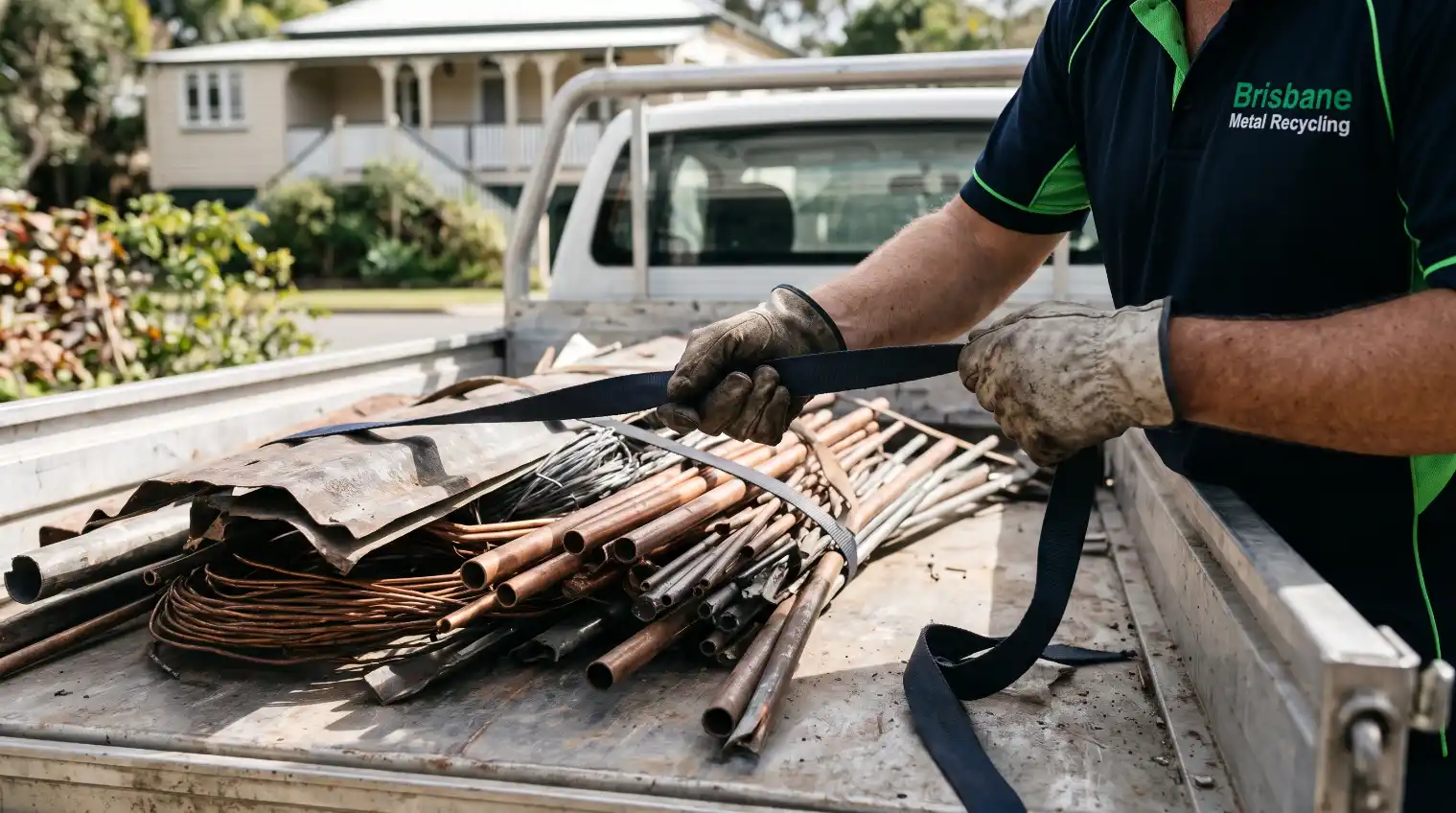
How you load a vehicle matters, both for safety on the road and at home. Put heavy items low and toward the front of the trailer or tray, spread the weight evenly from side to side and avoid piling things higher than you can securely restrain. An unbalanced trailer can sway easily, and a load that shifts as you brake can be dangerous for you and everyone around you. Secure everything properly. Use straps, ropes or tie-downs to stop the load moving forward, backward or sideways, and put loose small items in crates, bins or buckets so they can't slip out. Queensland has rules about load restraint, and the state publishes a load restraint guide that explains the expectations in detail. A quick check at your first stop after leaving home is a good habit, because loads settle and straps loosen as soon as you start moving. Stay inside your vehicle's limits. Every ute, trailer and tow vehicle has weight limits, and scrap is surprisingly heavy. If you're close to the maximum, make two trips instead of one overloaded one.
Respect the Heat
Heat is the hazard regular sellers forget about. In the Brisbane summer, a heap of metal in direct sun can get hot enough to burn bare skin, and a tray or trailer bed can be uncomfortable to touch. Wear gloves at all times, even if you're only moving a few pieces around, and whenever possible let hot metal cool in the shade. Take breaks, keep water close and plan heavy tasks for the early morning or late afternoon. Dehydration and heat stress slow your thinking and dull your reactions, which is how a minor slip becomes a serious one. Whenever you cut, grind or weld anything while preparing scrap, keep in mind that freshly cut metal stays hot for a surprisingly long time and does not always look it. Assume any metal that has just been cut is hot until proven otherwise, and keep sparks away from dry grass, fuel and anything flammable.
Keep Tools and Storage in Check
If you're using bolt cutters, hacksaws, grinders or other equipment to break items down, use the equipment with the guards attached, protect your eyes and hands, and never use a damaged tool. Ear protection is advisable when grinding or cutting for any length of time. Store stockpiles stably, away from footpaths and walkways, and keep children and pets away, because a metal stockpile can be a tempting climbing frame and a real danger to anyone who doesn't understand it.
Level Three: The Pro, Building Safety Into the System
If you're a tradie, a demolition crew, a small business or someone who sells scrap in bulk, you likely handle more metal in a month than a beginner does in a lifetime. Familiarity is your biggest strength and your biggest trap. The injuries that catch professionals usually come from rushing, fatigue or skipped steps.
Treat Safety as a Process, Not a Habit
If you employ people or work on a site, you have obligations under Queensland work health and safety laws, and a written approach to risk helps everyone. A brief, straightforward risk assessment will help you identify the main risks in your routine scrap handling, such as manual handling, vehicle movement, hot work, sharp items and unknown or contaminated items, and then decide on practical controls to reduce them. It doesn't need to be elaborate. It needs to be used. Discuss it with your team, update it as your work evolves and make sure everyone knows who to ask when something doesn't look right.
Take the Lifting Out of Lifting
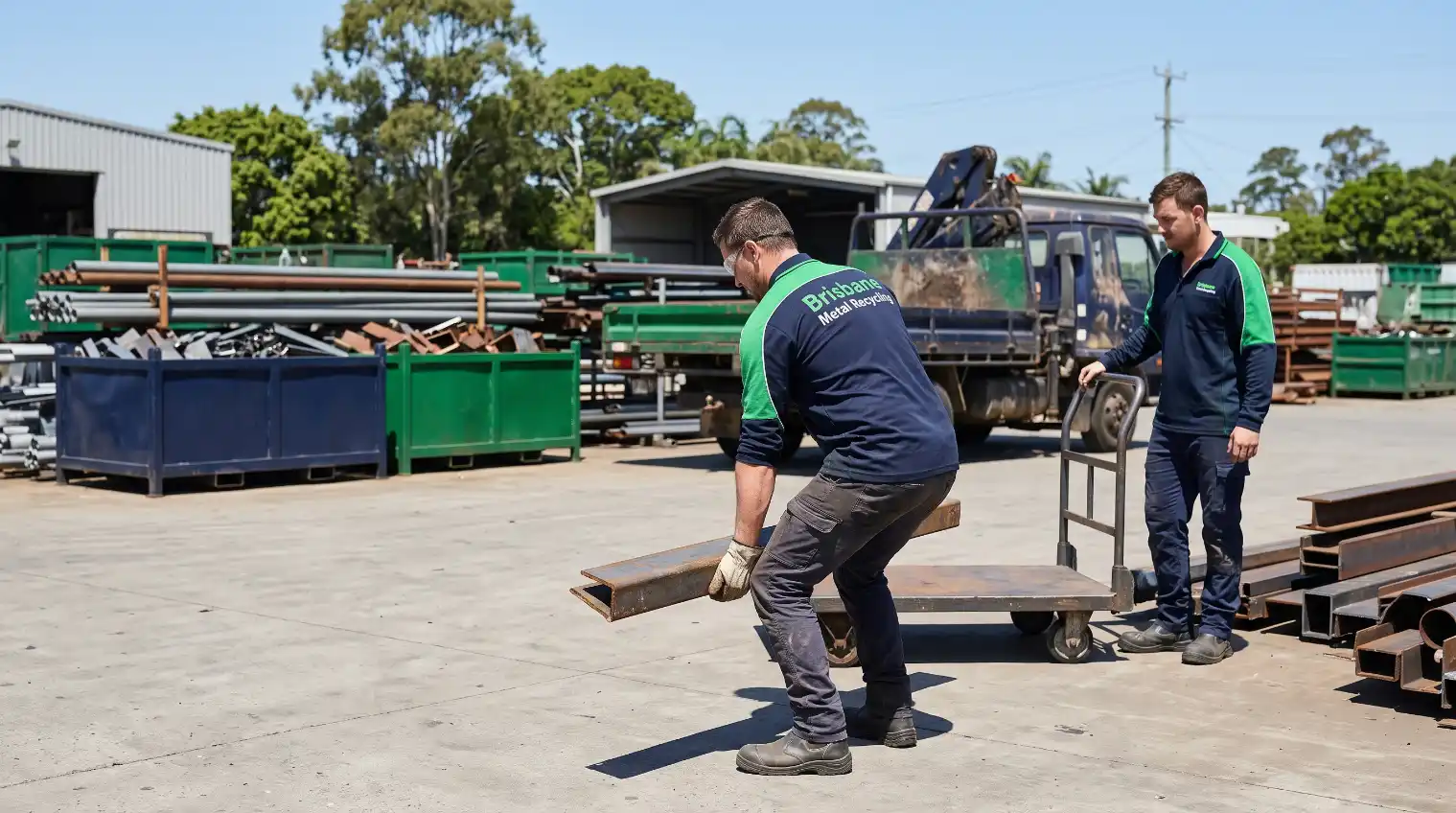
At volume, the best way to prevent back injuries is to stop relying on people's backs. Where possible, use trolleys, pallet jacks, forklifts, cranes and tilting trays to move material, and arrange the work area to minimise the distance it has to travel. Break heavy items down at the source into pieces your team can handle comfortably. Rotate tasks so one person isn't doing all the heavy lifting, and ask for a second pair of hands rather than treating it as a weakness. Experienced workers often hurt themselves precisely because they know they could probably manage the lift.
Be Strict About the Unknowns
The more material you move, the greater the risk of a hidden hazard. Sealed tanks, pressurised cylinders, old fuel lines, drums, batteries and items containing oil or refrigerant can behave unpredictably, particularly when cut or heated. Make it a firm rule: do not cut, crush or heat anything sealed until someone has verified the contents and confirmed it is empty and safe. The same applies to materials that could contain asbestos or other regulated substances. Those require special handling, and guessing is not a plan. Call Brisbane Metal Recycling ahead of time if you're in any doubt about what we'll accept and how it should be presented.
Manage Hot Work and Fire Risk Carefully
Cutting, grinding and welding produce sparks, heat and fumes. Keep a fire extinguisher close, clear flammable material from the area, make sure the team uses the correct eye, hearing and respiratory protection, and let cut material cool before it's handled or loaded. If possible, avoid loading anything that is still warm, as it can smoulder unnoticed when dropped onto a dry load. You should also consider ventilation; some coatings and metals give off fumes when heated that you don't want to breathe.
Plan the Yard Visit as Carefully as the Job
Your safety doesn't end when the load leaves your premises. When you arrive at a recycling yard, you're entering an environment with moving vehicles, heavy machinery and other customers. Always follow signs and instructions, stay in public areas, keep your hands and body clear of unloading material, and never walk behind or between moving equipment. Arrive with a load that is sorted, restrained and ready to come off safely, as a neat load benefits you, the yard crew and others on site. If you're not sure how to present a particular item or load, ask before coming in.
Look After the Team
Good habits spread through a crew. Make sure everyone has the right gear and replaces it when it wears out, keep a first aid kit stocked and easy to find, and make sure people know what to do if something goes wrong. Encourage reporting of near-misses without blame, because a near-miss is a free lesson and the cheapest way to find out what to fix. A short chat before each job about what's being moved, where the risks are and who is doing what costs a couple of minutes and prevents a surprising number of incidents.
One Rule That Applies at Every Level
Whether you're clearing a shed for the first time or dealing with tonnes of offcuts each month, one thing remains: slow down at the moment you feel like rushing. Nearly every scrap metal injury happens when someone tries to save 30 seconds, lifts something alone that needed two people, skips the gloves for a quick move or throws an unrestrained load on the trailer because the yard closes soon. The metal will still be worth the same money tomorrow. Your back, your hands and your eyes will not be so easy to replace.
Bring Your Scrap to Brisbane Metal Recycling
Safe handling is the first step. The next is bringing a well-sorted, properly secured load to a team that makes selling scrap straightforward. Whether you're a first-timer with a boot full of old pipes or a regular with a trailer to unload, we're glad to answer any questions you may have about what we take and how to prepare your metal before it arrives. Get in touch before your next trip so we can point you in the right direction, and help you turn your scrap into cash safely and without unpleasant surprises.