For the people it's the scavenging that's the hard bit. You've got the shed cleared, the fence down, the old trailer frame all taken apart and you've now got a pile of metal in the drive. The problem is it's in the drive. The way you load a heavy load in the back of a ute or on a trailer is quite different to loading a load of grocery bags. The way you load it can be the difference between a trip and a dangerous trip. We see loads of all shapes and sizes at Brisbane Metal Recycling. Some utes are very neat and well bundled up, others are just a complete and utter tribute to hope! Whatever you use to get your scrap to us (ute, trailer or tipper) this guide is for you. It's written in plain speak so every sale can go to the yard without any issues at all, whether you're a first time seller or you're a regular.
Why is it important to you to have the scrap loaded?
Scrap metal is dense, heavy and often sharp and will move about. When you brake, turn a corner or hit a bump everything on the tray will want to move. A loose pipe or a sheet of roofing iron can injure someone, damage the vehicles behind you and get you a fine. A balanced load can still negatively affect steering and braking, particularly when you're towing a trailer. There's more to it than that. All loads have to be secured to prevent them sliding, falling or being blown away in QLD. The right gear has to be used for the job. If you want the full story there is a Load Restraint Guide for vehicles which you may well find worth a read. Loads are subject to the HV loading rules and the driver and all those involved in the loading and transport of the load are responsible. All of that should by no means put you off. It's just a way of saying that a few minutes before you actually walk out will be worth a hundred times more than that.
What should you do prior to loading?
Use what you've got. There are a myriad of different types of scrap and a mix of metals will require a strategy to produce a continuous steel bar. If you can, sort it. Packing by type can make a world of difference! It all goes a lot easier when you get to Brisbane Metal Recycling. Next is protection. Gloves, sturdy boots and eye protection are sensible for any scrap worker. If the edges are rusty or sharp then long sleeves and long trousers are a good idea. Anyone working on a ute tray should use a ladder or steps rather than just jumping on and off as a lot of the injuries are slips and falls. If you can, get from the ground and don't just shove the bits up in the pile. Finally have a look at the vehicle. The tray, tailboard and any cage (headboard) should be in good order. A weak side wall or tailboard that won't take a load is no good. When you're towing you must always check the tyres, fittings, lights, coupling and safety chains prior to putting any load on the trailer.
How to load a ute
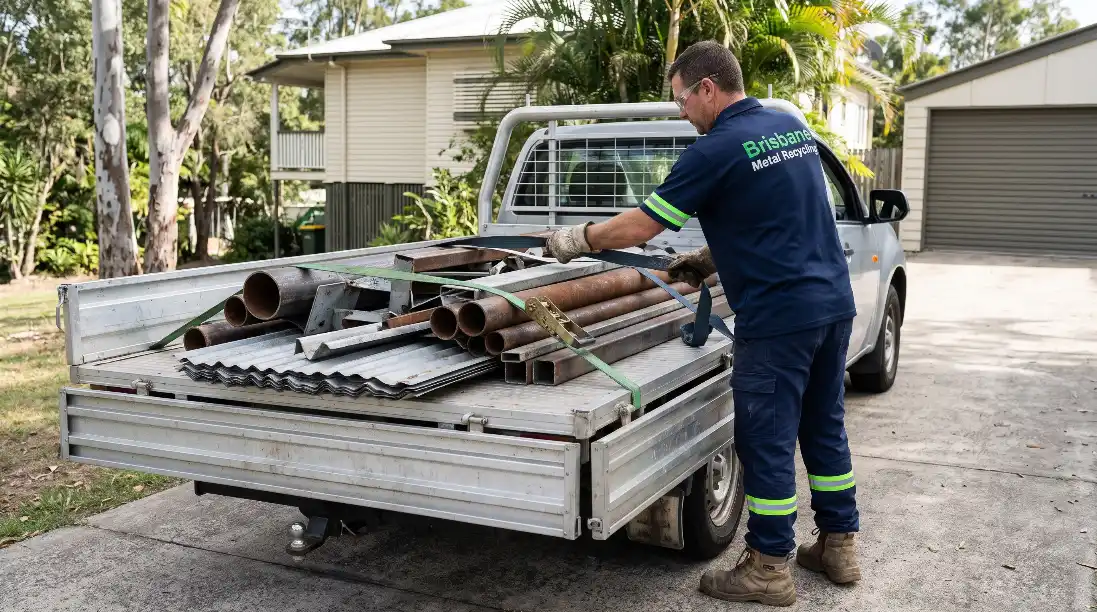
Almost all the vehicles we see are utes and they're the ones that are most frequently overloaded. There's a limit to the load each ute can be carrying and metal is heavier than most people realise. A half full steel tray is very likely to be at that limit. Those figures are on your compliance plate and in your owner's manual. Check them before you get in, not whilst you're driving. As the tray is loaded, the heavier, bulkier itemsbits go at the bottom of the tray as far forward in the cab as possible with the weight concentrated over or just in front of the axle. The smaller bits go on top and fill all the gaps so that nothing will move. You're looking for a well-balanced load with the weight evenly distributed left and right. A tall, skinny stack is going to be a lot easier to tip or move when going around a corner. Be very careful with long items (pipe, lengths of angle iron, rails, old fence posts etc). If at all possible, get them all in the tray. If they have to project past the back then you need to be aware of the QLD rules on projecting loads. Any load projecting up to 1.2m over the back of the vehicle (i.e. visible) is OK without a flag. Any load projecting beyond 1.2m and/or which is not visible from the rear must be flagged. You know the saying: 'when in doubt, cut it down or find another vehicle'! After loading, ensure the load is properly secured. Heavy loads are normally secured with ratchet straps which go across the load and hook onto a solid part of the vehicle (not the flimsy 'tray rails' or any loose fittings). Tarps and nets can be of use with lighter loads but must never be used in place of proper restraint of a heavy load. Give the load a good shove before you leave. If anything moves then it's not secure.
What about trailers?
Trailers are ideal for scrap and will obviously give you a hell of a lot of space. The problem is with weight distribution. If there's too much weight on the axle, then the rig will sway, the weight on the tow ball will be reduced and the rig as a whole will be very unstable. Too much weight will over load the tow ball. You need to know the weight ratings of your trailer and the vehicle you're towing and you need to stay within the trailer's weight ratings. The second is the trailer's capacity. The trailer has a load capacity and the tow vehicle has a pull capacity too. With a box load and a steel load, you can easily reach both limits. Two light trips are better than one heavy trip. Secure the load with straps or chains as appropriate. Secure it so that it can't move fore and aft or sideways. Headboards and sides are the obvious places to do this, though they're not the only ones. If you're putting a tarp or net over the top then you'll be able to prevent the wind-blown bits of scrap (all the offcuts, sheeting etc) from flying about. Smaller loose bits can be put into bins, crates or heavy duty bags. Do a quick check of the tyres and safety chains prior to departure and take the first few hundred meters very slowly to get a feel for the trailer.
How about tipping?
If you've got a tipper you're in a good position as you can unload quite quickly without having to get on the tray. There are issues of course. The tipper may well fall into the heavy goods vehicle category (GVW > 4.5 tonnes) and the capacity would be greater than for light vehicles. That could bring with it issues of licensing, mass limits and responsibility for loading. Always check first if you're at all in any doubt as to which category your tipper falls into. As you're loading the tipper apply the weight evenly. Don't go in and make it any heavier on one side or one end. Keep the metal load in one corner only as it's very easy to unbalance the tipper if the body is set up. Cover all the light scrap so it doesn't blow about and keep all the loose stuff in. Make sure the tailgate is properly shut before you drive off and never drive with the body up partway. Once at the yard, tip; go where you're told (on level ground and clear of any overhead objects and other people). You absolutely don't want to tip on a slope or near inattentive people. Please make sure everyone is clear of the Brisbane Metal Recycling team and await instructions.
What type of scrap do we need to be looking at?
Not all scrap is scrap, really. Sheet metal and roofing iron in particular have sharp edges and a shearing effect, which makes them quite safe to use. Common sense would be to stack them flat, bundle them tightly, and ensure none dangle outside the tray. Rather than dropping off one cut or small piece at a time, you'd use a container or a heavy bag. Pipes, tubes and any other hollow items should be checked for any liquid or residue. Any fuel, oil, or chemical that has been in an item should be drained. Gas bottles in particular should not be loaded. Sealed containers/pressure vessels can be a hazard. If you're in any doubt about whether something can be brought in, please call us on the Brisbane Metal Recycling phone line. It's far better to have that discussion on the phone than at the gate. Also consider batteries, appliances and equipment with moving or hot parts. Batteries must be kept upright and properly supported to prevent them falling over or leaking. Batteries will need to be supported when being lifted as will items such as washing machines, hot water systems etc. Overuse of a bad back is pretty much the norm for a human being who wants to be a hero with metal.
What's the best way to do the drive?
Once the load is in place your driving becomes very important. With a load on you're going to have longer stopping distances so you'll need a bigger gap to the car in front of you and you'll need to stop earlier at set points when approaching corners and roundabouts. Take corners slowly, don't brake unless you have to, and keep a close watch on the load in your mirrors, particularly in the first few minutes. If anything moves then stop somewhere safe and deal with it straight away. Also bear in mind the route when you're moving the load or when you're dealing with a load of an unusual shape. Low branches, sharp bends and steep hills can all put a strain on the rig. Sometimes a longer, more favorable route is the best one. The weather is of course a factor too (slippery when wet). Wind can pick up around light sheets and the like. A perfectly good load in the shed can quite easily become a different sort of load on the road.
What do you do with the recyclables once they get to Brisbane Metal Recycling?
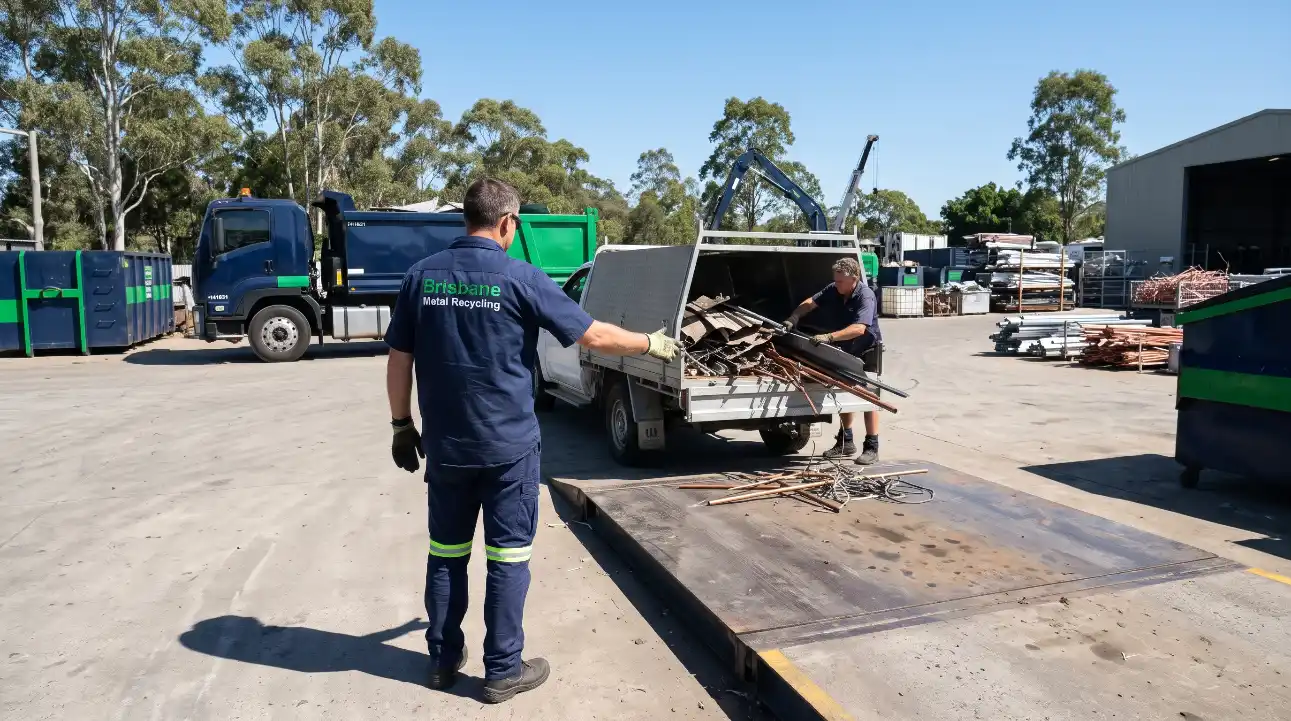
On arrival, do exactly what the yard team tell you to do. Unload whilst they are watching and drive very slowly. One of the things you'll be doing is, of course, ensuring everyone on site is safe, so it's always sensible to keep the kids and pets in the car or at home, and to stay in the areas you're told to. When you're removing the chains from the animal, you must take them off very slowly; otherwise, a heavy load could move as the chains are removed. You do that from the side of the load not in front of it. A properly sorted and packed load is much easier to go through and much easier to unload quickly. It can save you a day! It's nine metals, so do let the team know; they'll be able to point you in the right direction. Obviously, working in a tidy, organized manner is ideal for both you and the yard.
A fast, laid-out travel itinerary
Err on the side of caution, separate what you can. See how much the vehicle and trailer will hold. Pack the stuff low and towards the front. Wear the appropriate restraints and test them with a push. Keep the light bits in a tarp or container. Wear gloves and good boots. Check lights, tires and latches. Drive more cautiously than normal. On arrival, unload carefully in accordance with the team. When it comes to carrying loads, it's almost never about the gear (unless of course the gear is a loaded Eurocopter Eurorotor). It's all down to planning, patience and understanding what you're actually carrying. Just be calm, and your scrap will be ready to be cashed in at Brisbane Metal Recycling.