As mentioned in the previous post, your house contains more metal than you realise. When most people think of scrap metal, they imagine a collection of old cars and rusting machinery lying somewhere past the industrial estates, in a scrapyard. The reality is that metal can be found almost anywhere in your home, and the type of dwelling you have dictates where it is. Despite their obvious differences, a high-set timber Queenslander in a leafy suburb, a modern townhouse in a high-density complex, and a sprawling acreage block on the edge of a city share the same characteristic: someone lives in each of them and walks past a surprisingly high percentage of recyclable metals every day. We see this at Brisbane Metal Recycling all the time. After a weekend of cleaning out, someone shows up with the trailer and discovers all of the wonderful things you have in there. This guide takes you through the 3 types of properties and where to search for them. Consider it a treasure map for your own house, created by metal-sorting, weighing, and grading specialists. After you have determined what you're looking for, you'll begin to spot bits and pieces of it everywhere.
Exhibitions: The Queenslander: A Century of Metal Under the Roofline
The Queenslander is Brisbane's signature home, and it was designed to be metal-rich. These homes were designed to handle hot, humid conditions and heavy summer storms, and metal was a major part of how they worked. From the top down, you'll find that there's a lot of scrap in just about every inch of the structure. The Jackpot roof is the easiest for all to see. Corrugated iron has been used for generations on Queenslanders, and when a roof has to be replaced, or a section of corrugated roof has to be fixed, the old corrugated iron is just scrapped. This applies to the same items along the edges of the roof – ridge capping, gutters, downpipes and flashing. Recycling steel roofing is among the most popular in the country, and a full roof's worth of steel sheets is a lot of clean metal. Coated or painted sheets damaged by weather can still be returned, but how clean they are and how well they are sorted may determine whether they can be returned. Next, look at the verandahs and balustrades on the house. Some older homes are adorned with decorative metal elements such as cast iron lacework and railings; these are heavy metal. If you need to remove them as part of a renovation project, save them if they can be saved – don't put them in a bin. Cast iron is its own category and is separate from steel, so be sure to separate it. The house has a space between the house and the stumps, and in that area you will often discover the old plumbing. Over the decades, many older Queenslanders have had their plumbing replaced, leaving a section of old copper pipe, brass fittings, or galvanised steel pipe in the cupboard, under the floor, or in the corner of a shed. Copper or brass is one of the most valuable common metals used around the home, and a few lengths of old pipe or a handful of old taps would be worth picking up. Look for old brass door hardware, light fixtures, bathroom faucets, and older baths made of cast iron that were common in many homes. With older houses, there is one caution that's particular: Asbestos may be present in some building materials from earlier decades, including some sheeting, fibro products, and old roofing products used in homes. Do not cut, break, or take to a 'scrap yard' any material if you think it may contain asbestos in an older property. Have it evaluated and eliminated by a licensed professional first. Although metal can be recycled, asbestos-containing material cannot be mixed with metal, and your safety is more important than the value of any metal. Even old paint on metal can contain lead, so care is needed when handling and cutting painted metal items from older buildings.
The Townhouse represents a merging of small scale and concentrated metal.
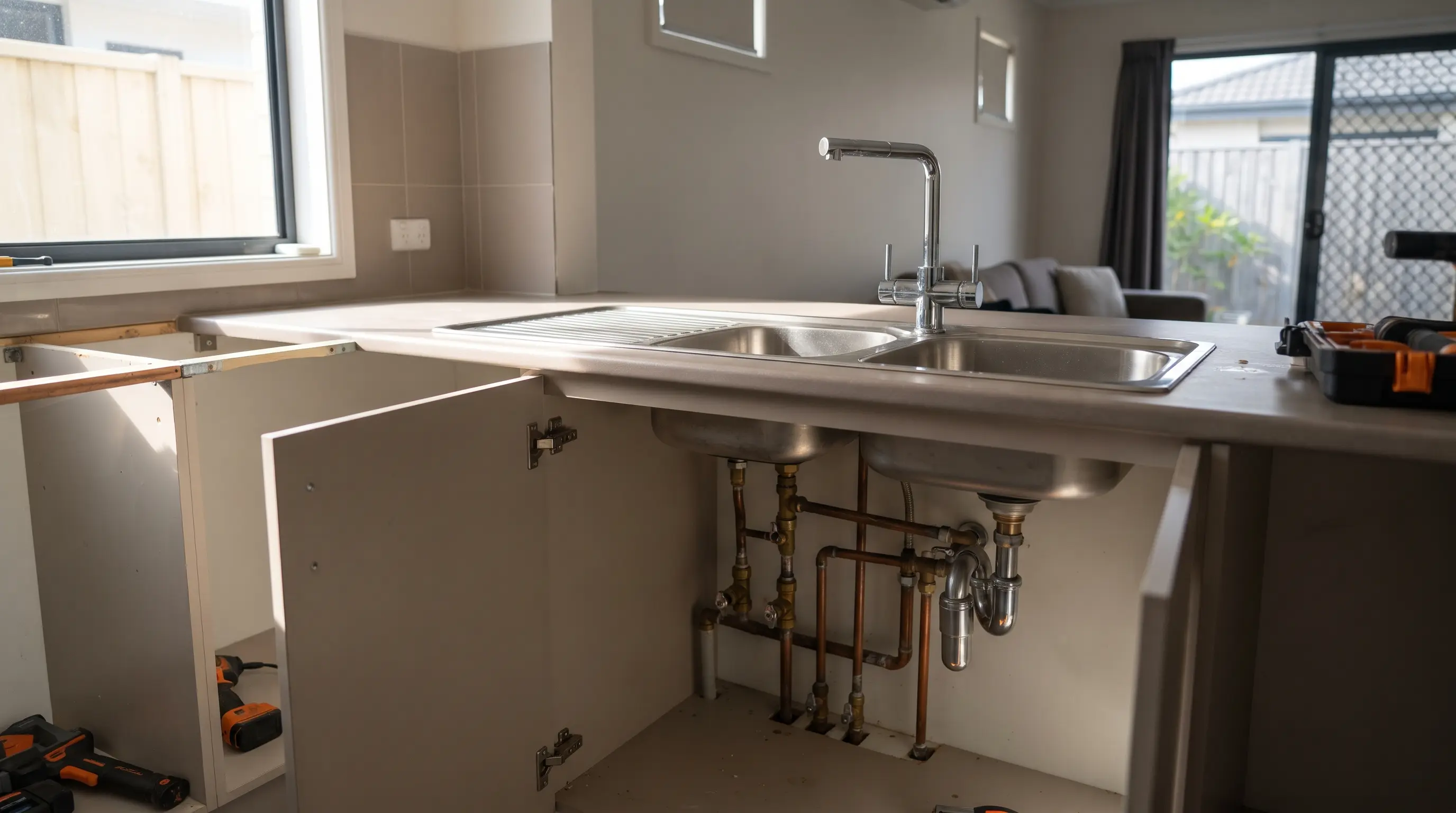
It's a completely different case with a townhouse. While there is less roofing, less fencing, and no sprawling shed, the metal is more often concentrated in a smaller area...and it's the prized variety. When you are renovating a townhouse, or at any time you clear out a unit, the metal tends to be hidden within the walls, fittings, and appliances. Begin in the kitchens and bathrooms, where the townhouses' metal is concentrated. Brass is commonly used for taps and mixers, and many have chrome plating, although they can still be valuable underneath. Some range hoods, benchtop fittings, or steel sinks are made of stainless steel and can be recycled separately from regular steel. However, when spring cleaning a kitchen, the sink, taps, and cooktop hardware should all be removed. Next, consider that a lot is going on behind the walls. Copper water pipes and electrical wiring are found throughout each townhouse, and if walls are opened up during renovation, any copper found is valuable to recover. One of the most-wanted scrap items is copper wire, and whether it's in a plastic sheath makes a difference in the grading process, as well as in value. Store away from other metals and avoid any contact with live wires. If any electrical maintenance or work must be carried out, it must be performed by a licensed electrician, and only wiring that has been isolated and made safe must be removed. The next item is the windows and doors. Aluminium window frames and sliding doors are common on many townhouses, and aluminium is light but an important value as a scrap metal. After removing the frames, remove the glass first, as glass must not come into contact with the metal. It's a worthwhile investment to save time cleaning aluminium frames, window tracks, and security screens. Sometimes, balcony balustrades and clothes drying racks are also made with aluminium and steel. Lastly, there is the growing mass of appliances, etc., that townhouse living tends to collect. A lot of steel, plus some copper and aluminium, is contained in old washing machines, dryers, dishwashers, and ovens. Air conditioners have a lot of metal due to their coils and compressors, which are made of copper and aluminium. We should be notified before you bring refrigerants back, because those appliances contain refrigerant and need to be handled properly so the refrigerant can be dealt with properly, such as fridges, freezers, and air conditioning units. The main point is that although a townhouse may not have as much metal as an acreage, what it does have may be high quality and worth separating.
The Acreage: Where the metal really piles up?
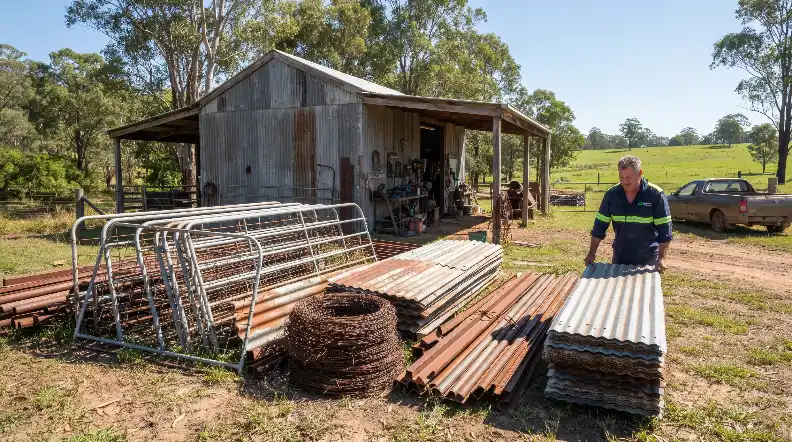
The Queenslander means full of heritage metal, and the townhouse means full of concentrated metal – and acreage means just that, full of metal, full of metal. On an acreage property, you can do a trailer load or several clean-up projects in no time at all, and big blocks come with fences, gates, sheds, tanks, and years of accumulated projects and machines. Start on the perimeter. Steel is in high demand around acreage properties, as fences are many and steel is the material that makes up fences. When a fence line is replaced and removed, star pickets, steel posts, wire, mesh, and gates will all become scrap. Old farm gates and cattle panels are thick steel and easily stackable and portable. You can also recycle the fencing wire that has been in use for years around paddocks; however, it will need to be bundled and freed of non-metallic items. Then examine sheds and barns. There are lots of places on the land with one or two sheds that could use a facelift, and the exterior cladding and framing on a steel shed consists mainly of recyclable metal. Another common characteristic is water tanks. Disused corrugated steel tanks and galvanised tanks can be a significant source of steel, as can disused pipes, troughs, and fittings attached to them. Before moving, drain and clean any tank; be careful of dangerous sharp edges on large pieces of sheet steel. Then think about machinery and vehicles. Old trailer in the paddock, abandoned car body, rusted ride-on mower, broken down tractor part, and the farm implements that have not been used in years – these are the most likely to be the property of acreage owners. These are pretty substantial items, and a substantial amount of shaving goes with #heavy items. They also occupy desirable land, and removing them can provide room for more productive uses. The paperwork may need to be taken care of for an old car or trailer, and it is always worth asking whether it is worth handling, so check with us before bringing in an old car or trailer! Remember those smaller pieces located around a working property. There are lots of things that can be considered old scrap - old batteries, pipes, chains, hinges, bicycle frames, wheelbarrows, water system brass fittings, and even the contents of the tool shed, not used in a decade. The odd ends in the corner of a shed could be more useful than you might think, on a large block.
Determine the common features among a variety of three-dimensional shapes based on their properties.
Regardless of what type of property you are in, some basic rules apply. One is that sorting does matter! Different metals are valued separately, and combining them may reduce the price you receive. The easiest way to sort is with a magnet. Items that are attracted to magnets (such as steel and iron) are placed in one pile, and items that are not attracted to magnets (such as copper, brass, aluminium, and stainless steel) are placed in another. In that second heap, further separating the copper, brass, and aluminium reduces the heap even more. The second point is that clean metal is worth more than dirty metal. You can make the job of handing in metal easier and nicer by removing plastic, rubber, glass, timber, and concrete first. Though you don't need to polish anything, a little will do a big job. The third lesson taught was on safety—heavy lifting, sharp edges, rusty metal, and old paint are all present dangers. Use thick leather gloves, closed shoes, and goggles or glasses; lift with your legs (not your back); and get help for anything heavy. Do not bring in any materials which may contain asbestos, gas bottles, or any materials containing fuel or chemicals – if there is any doubt, please ensure it is checked first.
What Happens When You Take It to Brisbane Metal Recycling? Let Brisbane Metal Recycling take care of your metal recycling.
When metal is received and processed, it is weighed, graded, and paid for based on its identity. Various types of metal vary in value, and so do the prices. That's where sorting at home comes into play—a collection that is already sorted can be evaluated faster and more clearly. We will discuss with you what you've got, how each type will be marked, and ensure you know how the overall mark is apportioned. For those who cannot physically relocate it all – due to a heavy load, an old car, or a big clean-out, please get in touch with us and inquire about a possible solution. Brisbane Metal Recycling will be pleased to discuss the most suitable way in which to dispose of your specific task.
First, take a walk around your property.
This is a simple first step. With a brand new set of eyes and a magnet in hand, stroll around your residence. In a Queenslander, look up at the roof, down at the plumbing, and out at the verandahs. If you are a townhome owner, open your cupboards and appliances, and consider what is on the other side of your walls. Acreage available - walk fences, inspect sheds, search behind machinery. There is sure to be something you can collect that you will appreciate. Brisbane properties come in many forms, yet they all share a common characteristic: they are more metal than owners can sometimes imagine. If you're ready to put it to the test and make some room, Brisbane Metal Recycling will help you get it sorted, weighed, and sorted for a good result.
Buddy, no idea what's going on inside that property? Call Brisbane Metal Recycling at brisbanemetalrecycling.com and discuss with them what items you have and how to make some money from them.